



Jessamyn Stanley, renowned yoga teacher and body positivity advocate and activist, known for breaking boundaries in the yoga industry, firmly believes that to love and be loved is the entire “reason that we’re here.” Jessamyn’s yoga story is a love story, a story about the process by which she learned to memorize the anatomy of love that resides in her flesh, her bones, her very DNA. Yet, it lacks the fairytale features of a prince and a fairy godmother’s magic. Jessamyn’s love story has grit, has blackness, has cannabis, and most importantly reveals that true love starts with the self. This realization came for Jessamyn after a very painful break-up that landed her in her first yoga class. As the only black, queer student in the yoga classes she took, her presence and the body it lives in were revolutionary for the thin, white, heterosexual, cis-woman yoga student status-quo. Yet Jessamyn is one of the most popular yoga teachers in the world, with over 457K followers on Instagram. Jessamyn’s journey to self-love is facilitated richly by a devoted yoga practice, offering notable insights about how to authentically love oneself, others and effect the positive change so needed in our world in 2021.
Crystal: How do you define love?
Jessamyn: Love is all there is. And there is such a lack of understanding of it because we live in a world that does not … I always feel like love is really just acceptance in action. That acceptance comes from a self-love, a self-acceptance. So much of why love is not understood in the mainstream is cause we’re not practicing self-acceptance. It goes down to this very basic thing.
Crystal: How has your yoga journey inspired your understanding of how to be active in a loving practice?
Jessamyn: Everything for me really stems from a lack of self-awareness and self-acceptance. [When I was young] I spent so much time pretending. I was told at a young age that I was good at certain things, so I just did those things, I studied those things, and I looked for jobs doing those things. I assumed that the happiness that I should experience in my life should come from my jobs doing those things. And I arrived to this place where I felt totally unsatisfied and just really deeply miserable. I felt like I couldn’t see the way forward. And that’s when I started practicing yoga. And it wasn’t like, “I’m feeling bad, so let me go to yoga.” It was mostly like, “I’m just gonna go to this exercise class, cause I liked the way it made me feel.” I didn’t make a direct correlation between what was going on inside of me and going to the yoga classes. I felt a pretty superficial connection to it. But, superficial or not, it was still extremely powerful. And it turned into, “I’m just going to keep doing it because it makes me feel good.”
Crystal: And doing things that feel good is a practice of selflove. Who are the yoga teachers, mentors, artists and authors who have influenced you during your yoga journey?
Jessamyn: There are a lot of teachers who have influenced me deeply. I’ve learned from a lot of thin, white, cis, het yoga teachers. A lot of people say, “You must have had a queer, fat, black yoga teacher,” and I’m like, technically, not really. But also, yes. I had teachers who were just living their yoga practice. There’s not a specific lifestyle or life identity that makes somebody more or less equipped to do that. So the teachers who were really influential for me in the beginning were teachers who were, I guess, internationally recognized teachers; but I really feel like the teachers that are the most influential for me, I mean who blow shit out of the water for me, are not people who are yoga teachers. It’s people who are just living their lives and being really honest and authentic with their reactions.
What’s really hooked me to yoga, the place where everything blooms, is this notion that in all of my conflict, in all of my confusion about my identity, at the place where all of my intersections collide, I can in that space, look at everything that’s there, take everything into account, hold every feeling fully, and I can still move forward from there. Nothing that happens at those intersections is wrong or bad or needs to change. Everything can be there.
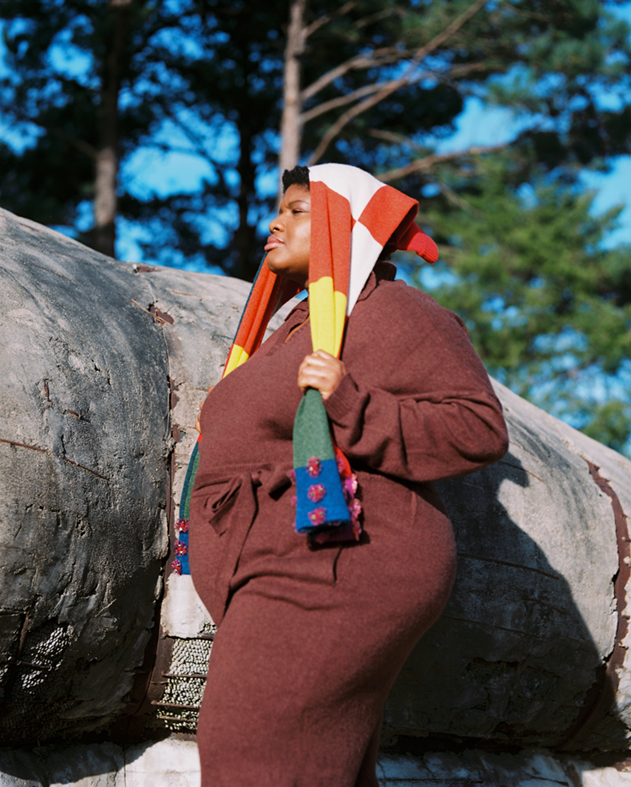
Knit top and pants NATIVE YOUTH shoes CAMPER knit sweater on head YANYAN
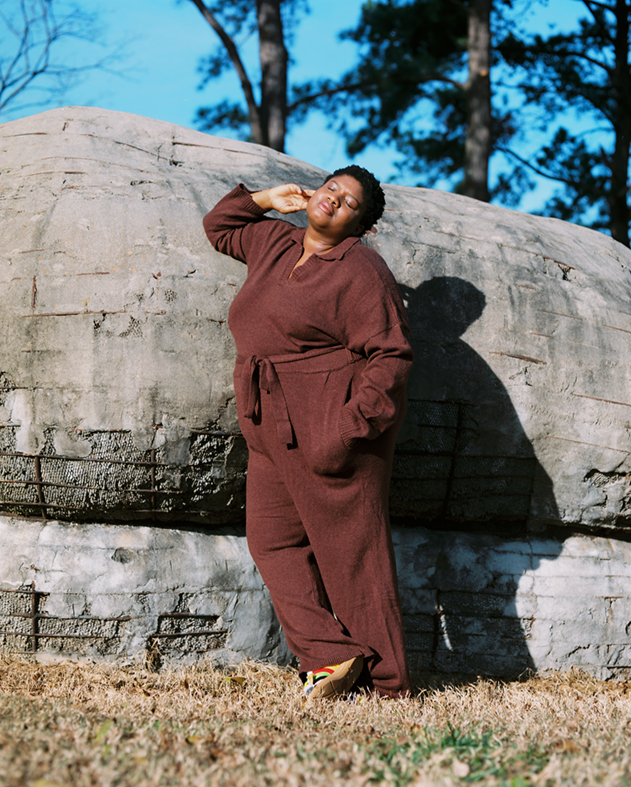
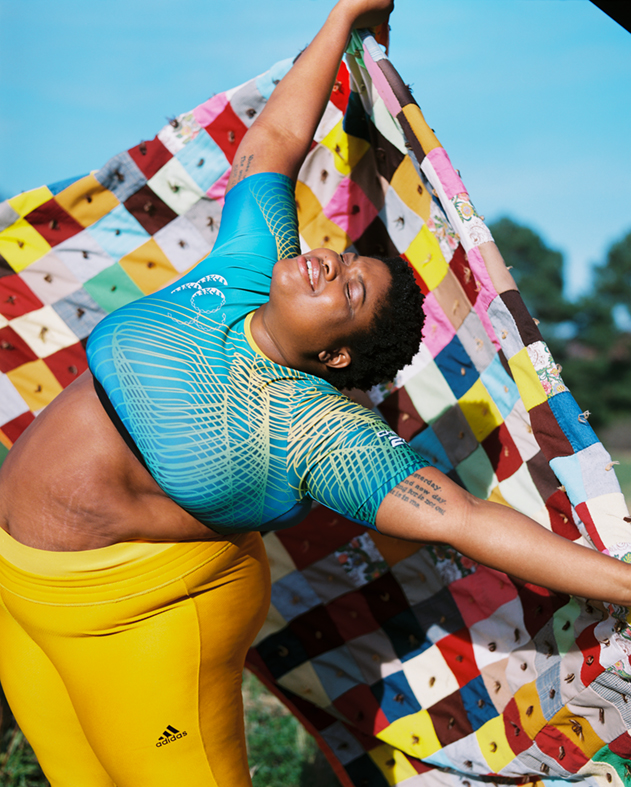
Top CHROMAT Leggings ADIDAS Quilt AUNTNEICE VINTAGE
I did not aspire to teach yoga because I didn’t really understand why there needed to be so many yoga teachers. It all happened because I was posting about my practice on social media, and I had people asking me to come teach them.
Crystal: I love what you said about the people who inspire you most on your yoga path not being yogis. It’s a reminder for some that the word yoga doesn’t mean “poses.” Right now at the end of 2020, we’re in this moment when all of a sudden people are seeing the reality of inequity more clearly because of COVID, racial injustice—all the suffering that those of us who are on the margins in terms of our social identities have always seen. How does what you just shared about yoga help you lovingly hold space for a reality where some people’s ideas, beliefs, and policies, literally create social barriers and violence, particularly at this moment of heightened awareness of social injustice?
Jessamyn: So this is the crux of the whole issue. What’s so funny about what’s happening right now is that everyone’s looking around like, “This is so awful! What’s going on?! Racism! Did you know about capitalism, too!? The government doesn’t care about anyone!” And I’m like, “Bitch that is literally what’s been happening this whole time, the whole time!” People for whom discrimination and marginalization cannot be ignored, have been talking about this the whole time. In America this shit was always going to happen, and this is such a huge piece of what it means for all of us to live together: we have to get to a place of accepting that not everyone is having the same experience that we’re having. That, to me, is the only way to be able to experience [love] and compassion. I look at Donald Trump and I have never seen someone who needs a meditation tank more in my life. That man looks thirsty. He needs a few gallons of water inside and outside. I’m talking salt bath … Seriously there is so much sadness happening in that human being. And, if I can see and experience that sadness myself, which I do, because I’m also living in this world, then I can see and experience where that person is coming from.
The era of performative kindness has got to end ‘cause it’s getting in the way of shit that needs to actually happen. I think that the conflict that we experience with people that we disagree with is so important because healing can’t happen without that conflict. All we’re doing otherwise is putting band-aids on top of gaping wounds that are just festering with disease. And we don’t talk about them, and they just get worse and worse. Part of the healing process has to be ripping that bandage off and letting shit air out and experiencing the hardness of it. I am a pacifist, but I don’t believe that this is going to be a violence-free experience because [the United States] was founded on violence. And it’s going the way of violence. The compassion comes when you can hear what someone else is saying, hear what the fuck they’re saying because that’s a human being just like you. And they have opinions just like you, and they have a right to have an opinion. And maybe their opinion is harmful to you. That is true.
Crystal: Every picture that you post on Instagram is an earth-shatteringly bold way to say, You know what? No. My body belongs here, too. I’m going to take up this space that is my rightful space to own. Every time you do this you are teaching. And good teaching is mentoring, it’s modeling. Good teaching is paying it forward in a compassionate way to those who are ready to receive the lesson. Your teaching is very accessible for so many. Can you describe your yoga teaching journey and what that practice of compassion looks like for you and your students?
Jessamyn: I did not aspire to teach yoga because I didn’t really understand why there needed to be so many yoga teachers. It all happened because I was posting about my practice on social media, and I had people asking me to come teach them. At the time I was working at a restaurant and I would practice on the guys in the kitchen because their backs were always fucked up after service. But I couldn’t afford to go to teacher training and my father didn’t have $3000 either, but when [my father] started saying I needed to go to training, then I realized that the universe was telling me that this is something I have to do. So I walked away from my teacher training with a better understanding of why there needed to be so many yoga teachers, and really why everybody should teach in whatever way you can. Even if you don’t teach in yoga studios.
The practice of finding compassion for yourself, there’s a different way to translate it for every single human. And the way I understand it is not going to resonate for everybody, but it could resonate for one person. And for that one person, that feels like a reason to go out and teach.
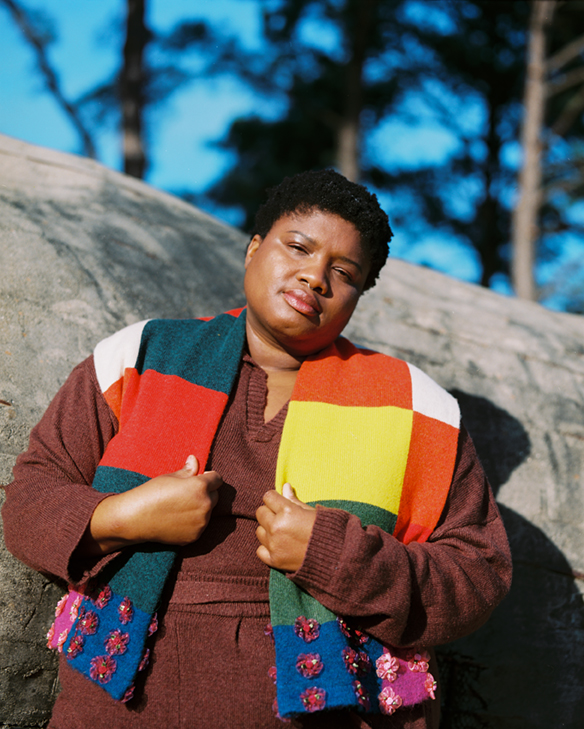
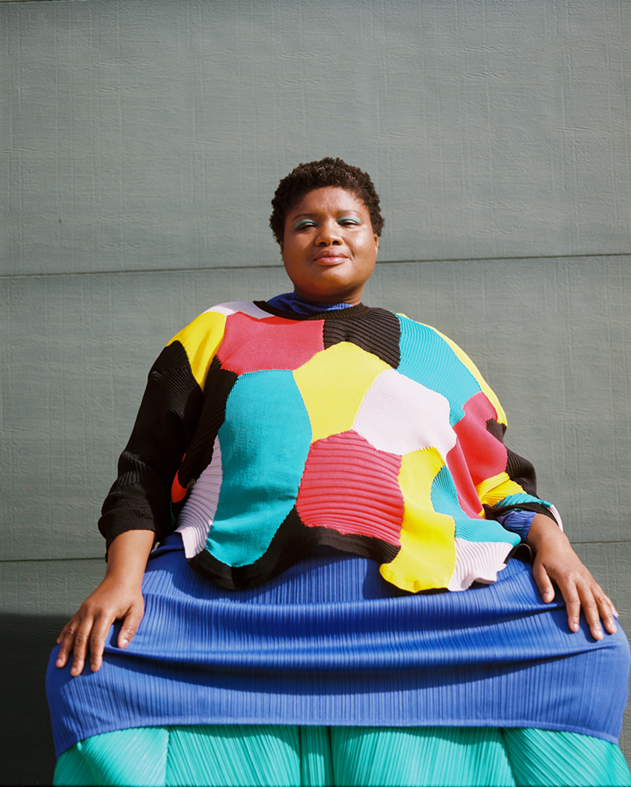
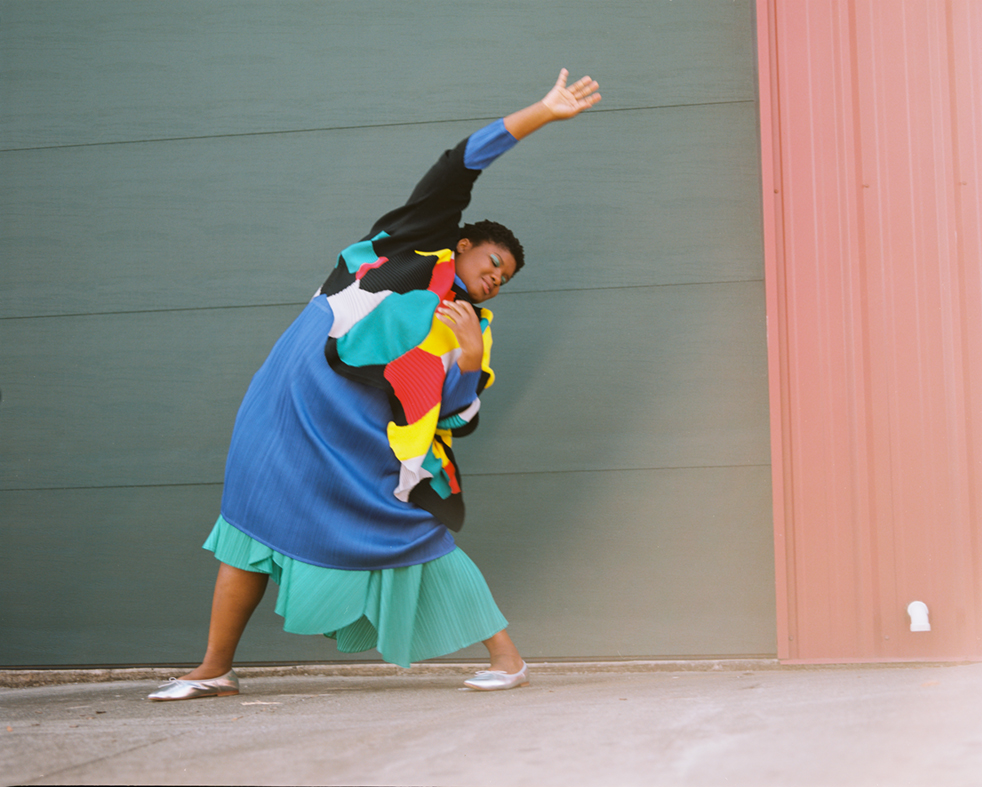
Shirt and dress ISSEY MIYAKE shoes MANSUR GAVRIEL
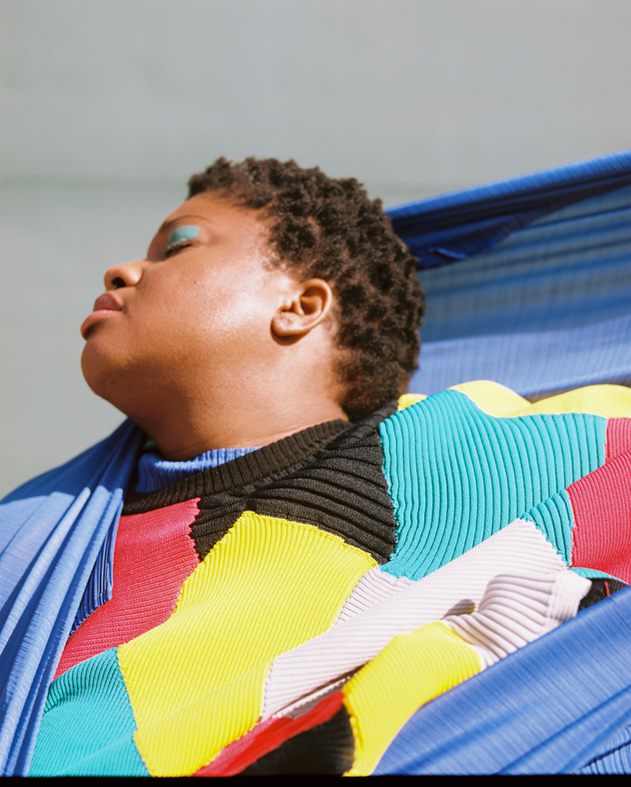
So I made a list of everywhere where I was asked to teach, and in my mind I’m just going down that list. Because I couldn’t physically go to all the locations, I started The Underbelly, my digital yoga studio which is available on a ton of streaming platforms. I started it because I just wanted to make sure that anyone, regardless of where you are on the planet, or what time of day it is, can find a class with me. But then not everybody is going to go to yoga classes. Some people really don’t care about practicing yoga postures, which is cool because yoga isn’t just about postures. That’s why I write books. So my first book, Everybody Yoga, is about how to start a practice. My next book, Yoke: My Yoga of Self-Acceptance, which will be out next summer, is about what happens once you start a yoga practice: dealing with what happens at the crux of your intersections, dealing with the shit that’s inside of you. And still not everyone is going to read books or go to classes, so I have my podcast, Dear Jessamyn. Dear Jessamyn is really about what yoga looks like in real life. So before I was saying that the most important yoga teachers in my life are the ones who do not practice yoga. My partners, and my family are the most important yoga teachers in my life. They teach me what it means to love for real. So the first season of Dear Jessamyn is about polyamory. So much of my yoga practice is living this lifestyle, and being honest: practices of radical honesty. The teaching is really just me living my practice. I’m just living my life and doing my thing. So yeah I teach sequences, and talk about alignment and philosophy, but at the end of the day, I’m just a practitioner. And that enables me to show up for other practitioners: by being myself. I’m not trying to be a part of a hierarchy. If I have a class, I make space; I roll out my mat and you can roll out your mat near me. I’m just holding space for you to do what you need to do and to be able to see yourself.
Crystal: I’m interested in your journey toward discovering polyamory. Was it something you had an instinct for? How did the way you learned to love intimately evolve?
Jessamyn: I feel like so many of the poly elders would never describe themselves as [polyamorous]. Never in a million years. Polyamory is when [two] people [who are in an intimate relationship,] also have a relationship [with at least one other] person, who is also an active part of the relationship. There is an old world quality to identifying as polyamorous that is not held because we live in such a hegemonic, patriarchal society. Everything is moving toward this idea that there is only one way to love other people; you can only be with one other person — there is this aspect of ownership that is really at the crux of supremacy. It’s nothing more than believing that it is important to own other people, and it’s important to get people to behave the way you want them to behave. It has nothing to do with love, it’s about ownership.
Crystal: Which takes us back to capitalism, btw!
Jessamyn: Exactly. My journey to poly has a lot to do with being in monogamous relationships, being cheated on, cheating on other people, and experiencing jealousy so big that there’s no way to describe it. Many people who listen to Dear Jessamyn say they could never be poly because they are too jealous, coming back to the idea of ownership. But the reality is knowing that I cannot make anyone in this world do anything. Period. Ever. In any situation. So if I know that, I can only focus on what I can do. If I know that I’m going to be focusing on me, then my first relationship is with myself. That’s who I’m in a relationship with. I’m in a relationship with Jessamyn. I’m getting to know that bitch. Everyday, getting to know new shit about that bitch: what she needs, what she wants and where she wants to go. And that means that anybody else is coming second to Jessamyn. Which then means, I am in a polyamorous relationship from the jump off. Poly is also this idea of radical honesty. Coming from someone who was once a serial monogamist: there is so much dishonesty in monogamous relationships. Down to the simplest things that you would lie to a partner about, first of all because you’re lying to yourself, but also because you’re trying to change yourself for other people. Starting with being honest with yourself and then reflecting that honesty to the world, that to me is what polyamory is about and why I practice it. I live with one partner who I’ve been with the longest, and my other partner who I’ve been with for a couple of years. We live together, in what I think they call a “V-formation.” I’m the bottom part of the V and I go up to the two. This process has been a whole understanding of what it means to be respectful of one another. One of my partners has another partner and we’ve all been quarantined together. The experience of learning to love my metamour—my partner’s partner—all of us existing together, has been a crazy experience in a beautiful way. We spend a lot of time emotionally processing and living just like everyone else. Radical honesty means lots of radically awkward and intense conversations. I find it to be so much better than lying: not lying to myself, and not intentionally causing harm to people I love. Trying to understand what it means to love them by trying to love myself.
Crystal: Well you make a strong case for it.
Crystal McCreary is an author, and a yoga, mindfulness, and health educator and teacher trainer with years of experience instructing yoga and mindfulness to people of all ages. She has a passion for implementing comprehensive wellness programs within schools and organizations to foster compassionate and equitable communities and sustainable work environments. She is the author of the Little Yogi Deck: Simple Practices to Help Kids Move Through Big Emotions On & Off the Mat. @cmccrearyyoga
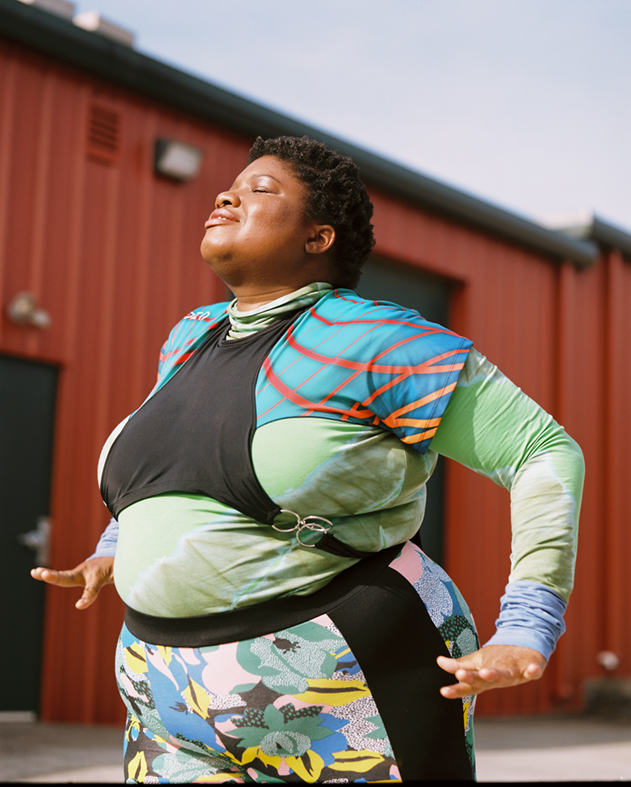
Tie-dye top ABACAXI vest CHROMAT shorts ADIDAS
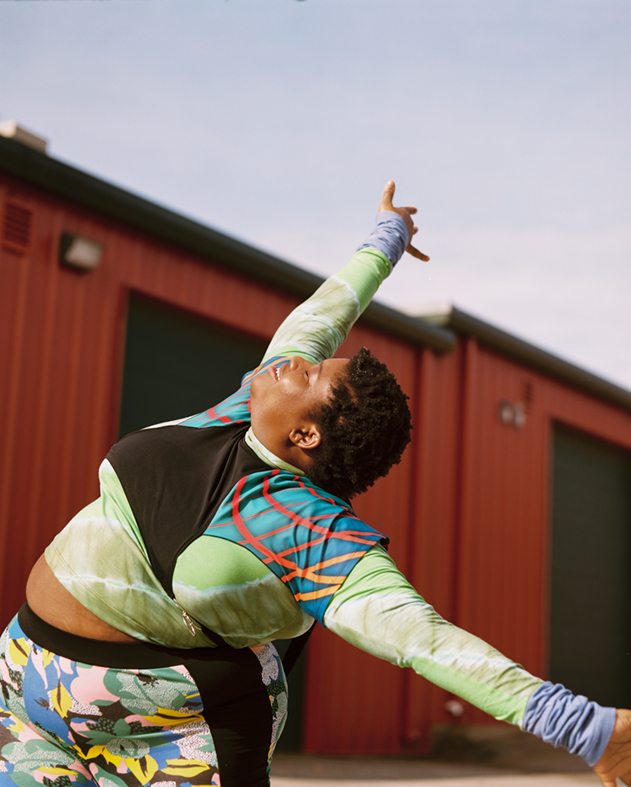
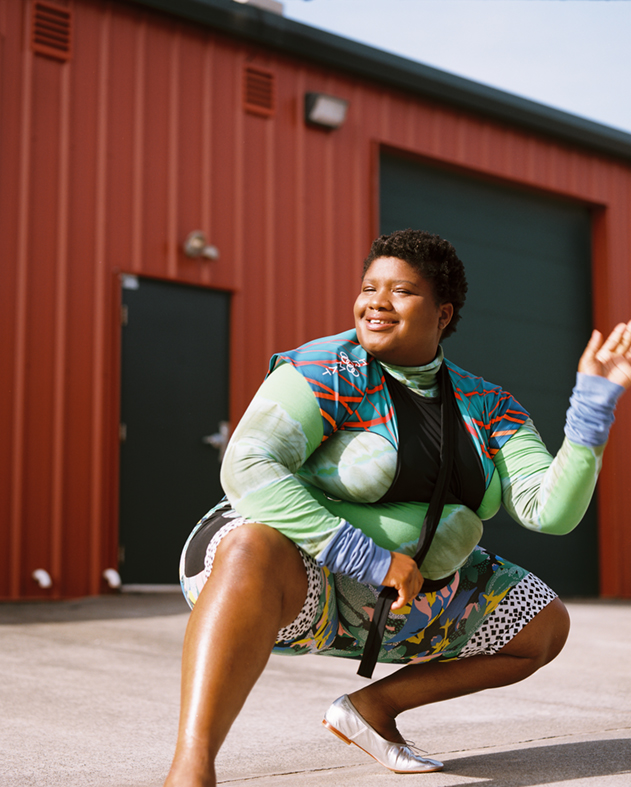
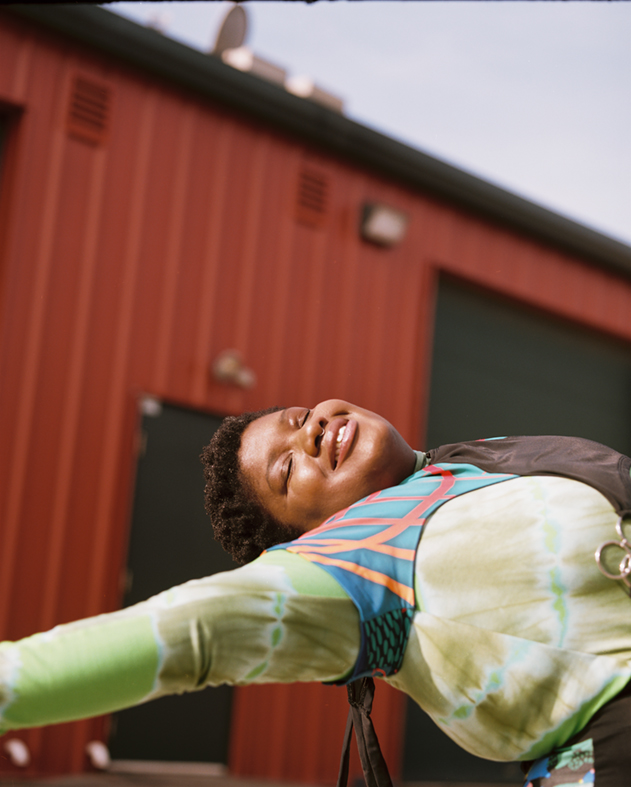
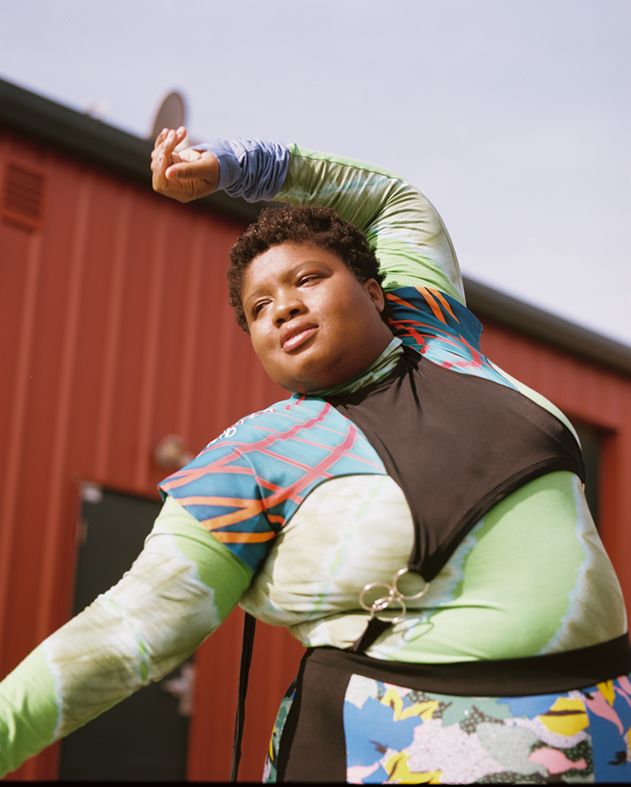
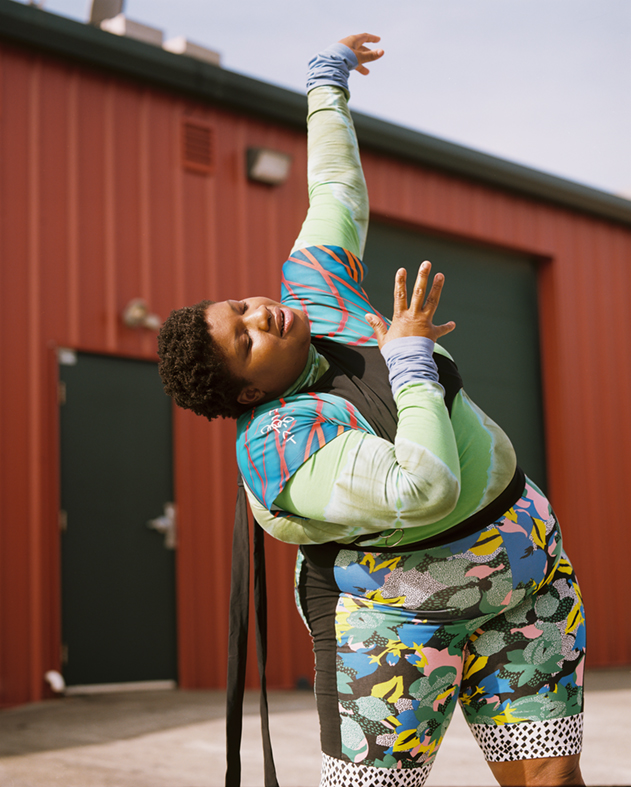
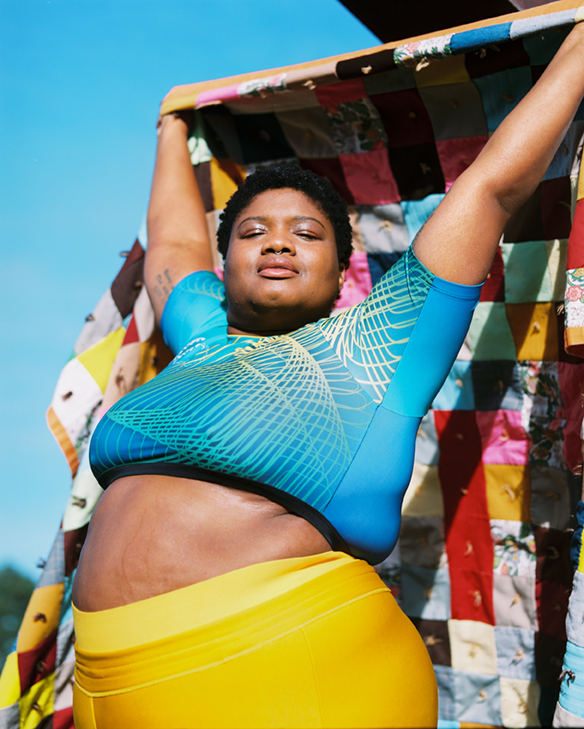
Top CHROMAT Leggings ADIDAS Quilt AUNTNEICE VINTAGE
Makeup and Hair: Ayaka Nihei
Styling Assistants: Pascia Sangoubadi, Alecia Lewis
Photo/Production Coordinator: Miss B.